Puppy Weight Calculator
Get an estimated adult range, input-confidence label, and a result link you can save or share.

Calculators
Browse
Learn
Company & trust
Estimates only. Not veterinary advice.
Puppy weight predictor
Use this puppy weight calculator to estimate how big your puppy may get from age, current weight, breed, sex, and optional parent weights. The result is a planning range, not a guaranteed adult size or medical target.
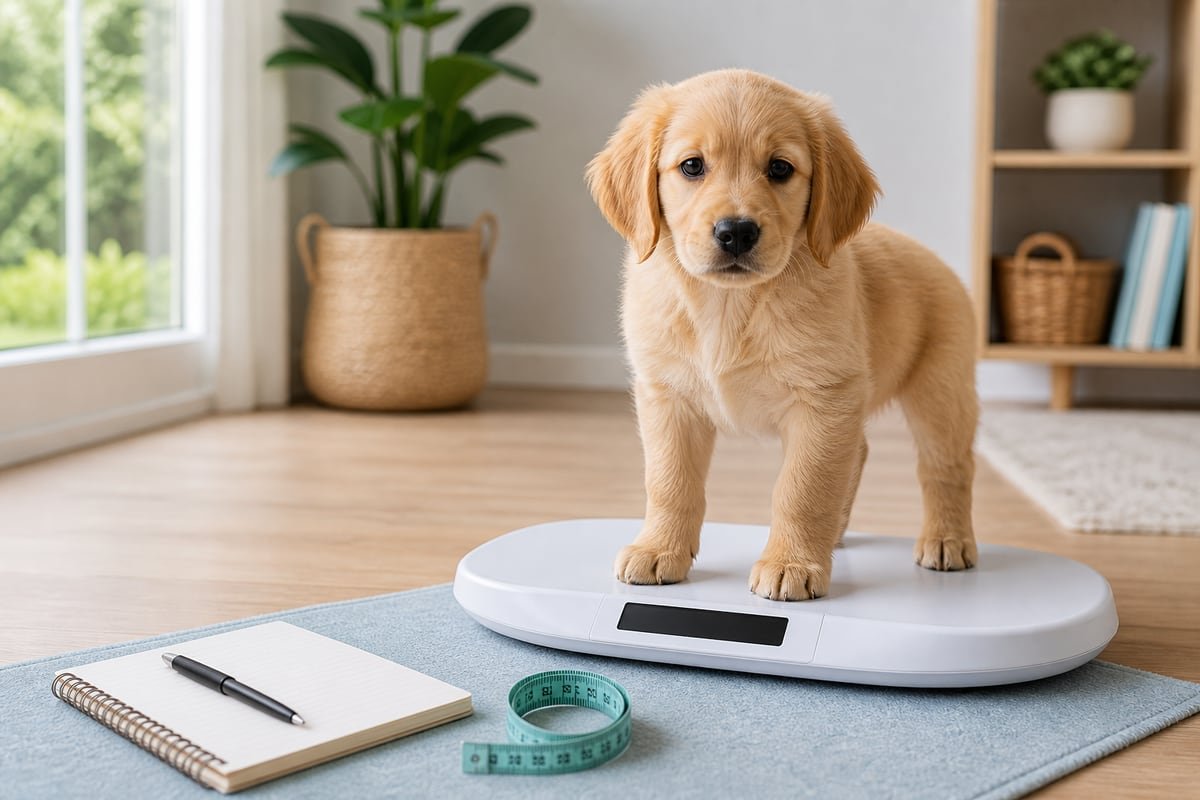
Puppy growth calculator
Start with age and current weight, then add breed, sex, and parent weights when you know them.
After the estimate, compare it with a breed weight chart, the matching dog size chart, and the body condition guide.
Planning tool only - not veterinary advice.
Puppy Weight Calculator
Get an estimated adult range, input-confidence label, and a result link you can save or share.
Quick answer
A puppy's adult weight is influenced most by genetics, breed or expected size, the size of the parents, sex, and the puppy's weight pattern over time. No puppy size calculator can know the final number in advance, but a current weight measured at a known age can place the puppy within a useful growth pattern.
This puppy weight predictor compares the weigh-in with a toy, small, medium, large, or giant size band. A selected breed supplies a typical adult range, while optional parent weights and sex add context. The result is deliberately shown as a range because healthy littermates can finish at different sizes.
Best signal
Rerun the puppy growth calculator after a fresh measurement. A series of consistent weigh-ins is more informative than one unusually high or low reading.
Open the puppy weight chartAge
Early growth changes quickly, so a difference of several weeks can move the estimate. Enter age in weeks or months and avoid guessing a younger age to force a larger result.
Weight
Use the same scale when possible and record weight before a meal at roughly the same time of day. For a small puppy, a pet or baby scale is more precise than subtracting two bathroom-scale readings.
Family size
Choose a breed only when it is known. Enter the parents' healthy adult weights when available, especially for a mixed-breed puppy or a breed with a wide adult range.
Transparent method
This is a puppy-to-adult dog weight calculator, not a simple linear multiplier. It uses the following sequence:
The calculator does not diagnose growth problems, calculate ideal feeding portions, identify a breed from weight, or predict exact height. It is best used alongside repeated weigh-ins, a body condition check, and veterinary growth monitoring.
What the result means
Growth timing
Smaller dogs usually approach adult size sooner, while large and giant dogs may continue growing and filling out well into their second year. These broad windows explain why one formula cannot serve every dog size.
| Expected adult size | General maturity window | How to interpret the estimate |
|---|---|---|
| Toy and small | Often about 8 to 12 months | The growth curve levels sooner, but body condition can still change after height slows. |
| Medium | Often about 12 to 15 months | Compare several weigh-ins with the same breed or size chart before narrowing expectations. |
| Large | Often about 15 to 18 months | Do not assume a large puppy is finished simply because the dog reaches one year of age. |
| Giant | May take 18 to 24 months | Longer skeletal development makes veterinary growth and nutrition guidance especially important. |
These windows overlap and are not deadlines. Breed, genetics, nutrition, health, and body condition can shift an individual dog's timeline. Read more in when dogs stop growing.
Unknown ancestry
Leave the breed field blank when the breed is unknown instead of choosing the closest-looking dog. The predictor will infer a broad size pattern from age and current weight, then use parent weights if you provide them.
Mixed-breed estimates usually deserve a wider margin because ancestry, age records, and parent size may be uncertain. Recalculate after several weigh-ins and treat a DNA-based size estimate as another clue, not a guarantee.
Known breed
Select the breed in the calculator, then compare the result with its dedicated chart. That adds adult range, sex, age checkpoints, and body-condition context that a single dog size estimator cannot show.
Questions
The calculator uses this site's size-class checkpoint tables and curated breed adult ranges, then interpolates between ages and blends optional breed, sex, and parent information. It does not reproduce a clinical centile chart and has not been clinically validated. The references below support the growth concepts and interpretation guidance on this page.
Planning estimates only. Not veterinary advice. Last reviewed July 30, 2026.