
When Do Dogs Stop Growing?
Most dogs stop growing between about 6 and 18 months, but some giant breeds continue developing until 18 to 24 months. Use expected adult size first, then track height, weight, and body condition over time.
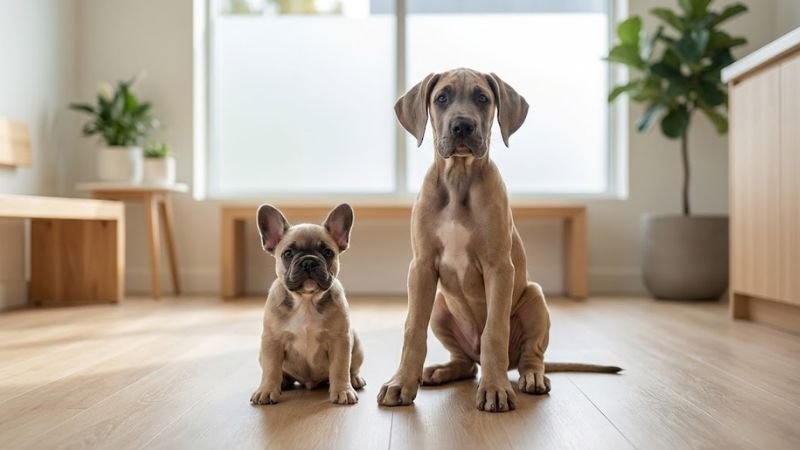
When do dogs stop growing by size?
Adult size is one of the strongest clues to growth timing. Small dogs usually complete visible growth sooner, while larger dogs generally have a longer period of skeletal and physical development.
| Expected adult size | Typical timeline | What usually happens |
|---|---|---|
| Toy and small | About 6–12 months | Height and weight settle earliest. |
| Medium | Around 10–15 months | Most growth finishes near the first year. |
| Large | Around 12–18 months | Height slows first; the body may keep maturing. |
| Giant | Up to 18–24 months in some breeds | Skeletal and physical development take longest. |
These are useful ranges, not deadlines. The Merck Veterinary Manual places skeletal maturity at roughly 8 to 12 months for small and medium dogs and 10 to 16 months for large and giant dogs. Broader breed guidance notes that some very large dogs can continue developing for up to 24 months.

When do small dogs stop growing?
Small dogs often finish most visible growth within their first year. The American Kennel Club notes that some small breeds stop growing at about 6 to 8 months, while veterinary guidance places skeletal maturity for many small dogs closer to 8 to 12 months.
Examples include the Chihuahua, Dachshund, Yorkshire Terrier, Pomeranian, and Shih Tzu. A small dog that has stopped getting taller may still gain muscle and adult body condition. Compare any later scale increase with the dog body condition score guide rather than assuming it is all normal growth.
When do medium dogs stop growing?
Medium dogs often approach adult size near their first birthday, although some keep developing for several additional months. Many fall within a rough 10-to-15-month window.
Beagles, Border Collies, Cocker Spaniels, and Australian Cattle Dogs are common examples. The exact timing varies by breed and individual. A medium puppy following a steady curve at 11 months does not need to match another dog's final weight simply because both dogs are the same age.
When do large dogs stop growing?
Large dogs generally need more than one year to complete growth. Many continue developing through 12 to 18 months, with skeletal maturity occurring later than it does in smaller dogs.
Labrador Retrievers, Golden Retrievers, German Shepherd Dogs, and Rottweilers are common examples. A large puppy can reach nearly adult height before chest and muscle development are complete. Compare its trend with the large-dog weight chart or the matching breed weight chart.
When do giant dogs stop growing?
Giant dogs take the longest to mature. Some continue substantial physical development until 18 to 24 months, particularly Mastiffs, Great Danes, Saint Bernards, and Irish Wolfhounds.
A longer timeline does not mean a giant puppy should grow as quickly as possible. AAHA nutrition guidance recommends an appropriate growth diet until skeletal maturity and keeping large- and giant-breed puppies lean. Evaluate the trend and body condition instead of encouraging an early race to adult weight.
What actually makes a dog stop growing?
A puppy stops growing taller when the growth plates near the ends of its long bones finish producing new bone and close. Once those plates close, the bones have essentially reached their final length. This process is called skeletal maturation.
Age alone cannot confirm that development is complete. Smaller dogs generally reach skeletal maturity sooner, while larger dogs take longer. A veterinarian can use X-rays when there is a medical reason to determine whether growth plates remain open; home observation can show a slowing trend but cannot confirm closure with the same certainty.
Full height, adult weight, and full maturity are different
Dogs often stop gaining height before their adult body composition is fully developed. Think of growth as three overlapping stages:
- Height growth: long bones lengthen while the growth plates remain active.
- Weight development: body weight changes as the puppy approaches adult size; some gain is normal, but excess calories can also add fat.
- Filling out: the chest, muscle, and adult proportions can become more defined after obvious height growth slows.
That is why a 14-month-old large dog may be close to adult height yet still look leaner and less developed than the same dog at two years.

How much growing does a puppy have left at 6 months?
The answer depends heavily on expected adult size. At 6 months, a small dog is usually much closer to final weight than a giant dog. AKC provides these broad estimates of the percentage of adult weight reached at each age:
| Age | Small | Medium | Large | Extra-large |
|---|---|---|---|---|
| 6 months | 75% | 66% | 60% | 50% |
| 9 months | 90% | 85% | 75% | 65% |
| 12 months | 100% | 95% | 85% | 80% |
| 15 months | 100% | 100% | 95% | 90% |
| 18 months | 100% | 100% | 100% | 100% |
These are approximate growth-timing comparisons, not ideal-weight targets. For an age-by-age view, use the puppy weight chart by age.
How can you tell if your puppy is still growing?
The best home clue is a continued trend, not one isolated measurement. Track:
- Height at the withers: measure from the floor to the top of the shoulder blades using the same method each time.
- Weight: look for steady change across several dated weigh-ins.
- Proportions: legs, chest, and frame can become more balanced during development.
- Size-specific curve: compare with the appropriate expected adult-size group.
Do not rely on paw size alone; large paws are not a validated adult-weight prediction. A PLOS ONE study using more than six million young-dog weight records found distinct growth curves by expected adult size, supporting repeated tracking against the right size context.
How do you know when a dog has stopped growing?
A dog is probably nearing the end of visible growth when height measurements stop changing and weight increases become smaller over repeated check-ins.
| Check-in | Age | Weight | Height at withers | Body condition |
|---|---|---|---|---|
| Check 1 | 8 months | Record | Record | Record |
| Check 2 | 9 months | Record | Record | Record |
| Check 3 | 10 months | Record | Record | Record |
Use the same scale and measuring method whenever possible. Stable height across several months plus only gradual weight change can indicate that adult size is approaching. Veterinary assessment is the definitive option when there is a clinical reason to confirm skeletal maturity.

Do dogs keep gaining weight after they stop growing taller?
Yes. Muscle and adult body mass can keep developing after height growth slows. But not every increase on the scale is healthy filling out: calorie intake that remains high as growth slows can also add excess body fat.
Use body condition beside the scale. Healthy development should preserve palpable ribs, a visible waist from above, and an abdominal tuck from the side rather than push the dog toward the highest possible weight.
Does breed affect when a dog stops growing?
Yes. Breed influences expected adult size and therefore the length of the usual growth period. Purebred dogs are often easier to place into a timeline because their typical adult size is known, but breed does not remove individual variation.
Two Labrador Retrievers born on the same day can finish at different healthy adult weights. Sex, frame, genetics, and individual growth patterns all matter. Use the dog weight chart by breed to establish context, not a mandatory target.
When do mixed-breed dogs stop growing?
Mixed-breed puppies follow the same general rule: a smaller expected adult size usually means earlier maturity, while a larger expected size usually means a longer growth period. The challenge is choosing the right adult-size group.
Start with current age and weight, known parent size, likely breed mix, and repeated weigh-ins. Update the estimate as more data becomes available. The dog weight calculator and puppy growth calculator use current measurements first, with breed, sex, and parent size available for more context.
Does nutrition affect when a puppy stops growing?
Nutrition affects the quality and rate of growth, but extra food should not be used to make a puppy reach adult size faster. Merck notes that puppy growth is fastest during roughly the first five months and begins to plateau after six months. It recommends a complete growth diet until skeletal maturity.
Large and giant puppies need particular care because excessive energy intake or inappropriate nutrient balance can interfere with healthy skeletal development. The goal is steady, lean growth—not maximum growth speed.
When should a dog switch from puppy food to adult food?
The transition should follow growth stage rather than one universal birthday. Merck recommends continuing a complete growth diet until skeletal maturity. AAHA similarly notes that small and medium dogs are often ready at around one year, while some large and giant breeds may not reach skeletal maturity until about 15 to 16 months or later.
Discuss timing with your veterinarian, especially for a large or giant breed. A first birthday alone does not prove that growth is finished.
Can growth charts show when a puppy is nearly full grown?
Growth charts can reveal whether gain is slowing and whether a puppy remains on a reasonably consistent trajectory. The 2017 PLOS ONE study built canine growth standards from 12 weeks to two years across five adult-weight categories.
A later PLOS ONE study found that healthy dogs rarely crossed more than two centile lines and that larger shifts occurred more often with abnormal growth or body condition. That makes the direction of repeated measurements more informative than asking whether one weigh-in sits above or below an average.
What can affect a puppy's growth pattern?
Breed and genetics strongly influence adult size, while nutrition and health affect how the puppy follows that underlying pattern. Relevant factors include expected adult size, breed, sex, parent size, calorie and nutrient intake, body condition, and illness.
Growth research also found small differences in weight trajectories associated with neutering age, but those shifts were minor compared with normal variation among individual dogs. Avoid making an adult-size prediction from one factor alone.
When is a growth change worth discussing with a veterinarian?
Ask your veterinarian if a puppy stops gaining unexpectedly during active growth, loses weight, gains unusually quickly, becomes clearly underweight or overweight, develops persistent vomiting or diarrhea, has a major appetite or energy change, appears painful, or develops abnormal movement.
A growth chart can show that something changed; it cannot diagnose why. Prompt veterinary advice matters more than trying to force the line back toward an average at home.
The practical takeaway
Dogs stop growing on different timelines depending mainly on expected adult size. Small dogs often finish within the first year; large dogs need longer; and some giant breeds keep developing until 18 to 24 months. Height can stabilize before adult weight and muscle development are complete.
Track height and weight over time, compare the correct size or breed context, and use body condition instead of one birthday as the definition of fully grown.