Adult standard
Males: 65-75 lb; females: 55-65 lb
The official adult standard gives 65-75 lb (about 29.5-34 kg) for males and 55-65 lb (about 24.9-29.5 kg) for females. Your veterinarian can assess the right weight for your individual dog.

Calculators
Browse
Learn
Company & trust
Estimates only. Not veterinary advice.
Compare the official adult Golden Retriever weight standards in kg and lb, then learn how to track your puppy with repeated weigh-ins and a suitable growth chart. Adult breed standards describe the breed; they are not monthly puppy targets or an individual dog's ideal weight.
A Golden may look healthy because the coat is full, so hands-on rib checks and repeat weigh-ins are essential.
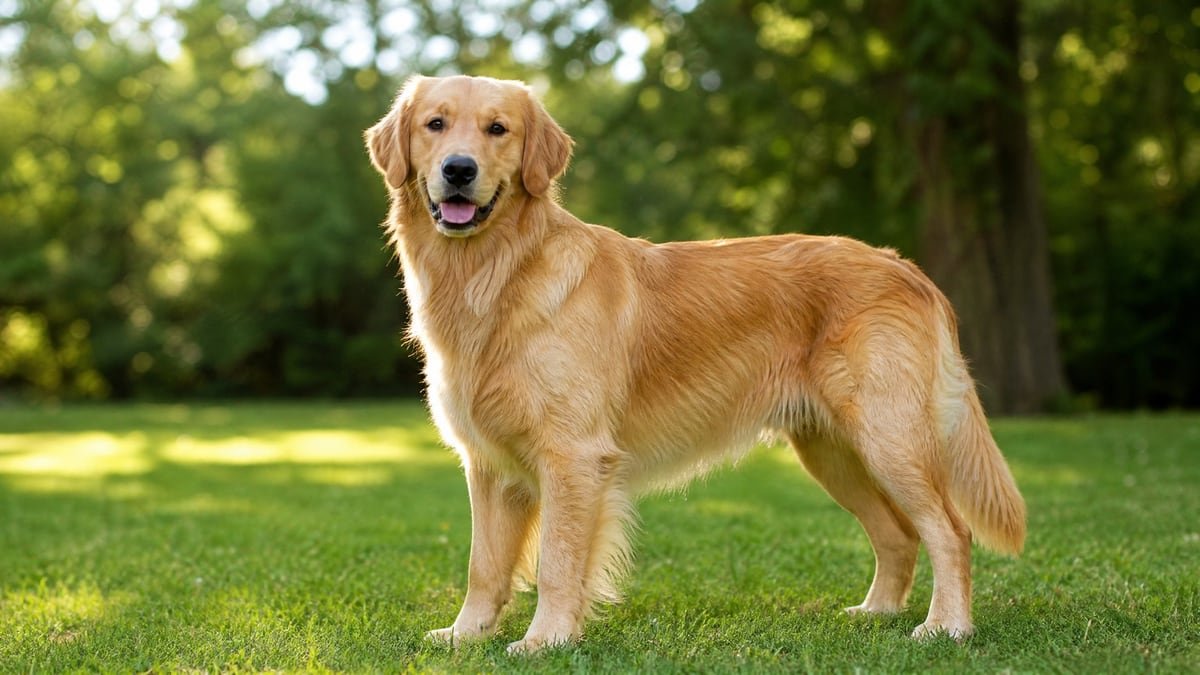
Overview
Breed standard
Males 29.5-34 kg; females 24.9-29.5 kg
Males 65-75 lb; females 55-65 lb
Size class
Large breed
Matched size chart
Growth pace
Slower
Typical for this breed size
Check-in cadence
Weekly to monthly
Suggested rhythm
<16 w weekly | 16-32 w biweekly | 32 w+ monthly
Quick answers
Start with the adult breed standard, then consider your dog's own growth pattern and body condition.
Adult standard
The official adult standard gives 65-75 lb (about 29.5-34 kg) for males and 55-65 lb (about 24.9-29.5 kg) for females. Your veterinarian can assess the right weight for your individual dog.
Puppy growth
Age alone does not identify one correct puppy weight. Use a growth chart matched to sex and expected adult size, and interpret it with body condition and veterinary guidance.
Full grown
Maturity varies between individual Golden Retrievers. Height, muscle and body condition do not all settle at the same time, so ask your veterinarian to assess development before changing a growth diet or exercise routine.
Condition check
Part the coat, feel for the ribs and check the waist. A full coat can hide changes that the scale or appearance alone does not explain.
Adult weight reference
The AKC breed standard gives the adult male and female weights below. These are breed-standard references, not a weight target for every pet or a schedule of puppy weights.
For puppy growth, use repeat measurements and a chart that matches sex and expected adult size. WALTHAM provides research-based growth charts; its growth curves are validated from 12 weeks of age. Ask your veterinarian to help choose and interpret the appropriate chart.
| Reference | Adult weight |
|---|---|
| Adult male breed standard | 65-75 lb (about 29.5-34 kg) |
| Adult female breed standard | 55-65 lb (about 24.9-29.5 kg) |
Maturity
Maturity varies between individual Golden Retrievers. Height, muscle and body condition do not all settle at the same time, so ask your veterinarian to assess development before changing a growth diet or exercise routine.
Keep repeat measurements and ask your veterinarian whether growth is following an appropriate pattern.
Height, frame, muscle and body condition provide different clues about development.
Discuss the move from puppy food to adult food with your veterinarian instead of changing diet on a fixed birthday.
Continue hands-on body checks after growth slows; a stable height does not mean body condition cannot change.
Key takeaway
Brush, weigh, and feel the ribs before changing portions. The coat can hide both extra fat and a puppy that is too lean.
Growth check
For Goldens, growth looks best when weight, coat, skin, movement, and appetite all tell the same steady story.
Grooming check
Part the coat, feel the ribs, check the waist, and note any skin or ear changes. Share concerns with your veterinarian when reviewing the weight trend.
Weight factors
Golden weight trends are shaped by sex, coat, line type, exercise, and how closely food rewards are managed.
Males commonly finish heavier and taller, while females often stay lighter even when perfectly healthy.
Some field-style Goldens stay leaner and more athletic, while some companion or show lines mature with a broader body.
A full coat can make a lean dog look larger or an overweight dog look normal, so hands-on checks are essential.
Itching, ear discomfort, or orthopedic soreness can reduce movement and shift weight even if meals stay the same.
Goldens are eager learners, but repeated food rewards from several people can quietly exceed the plan.
After maturity or reproductive surgery, calorie needs and activity can shift. Recheck portions, treat calories, rib feel, and waist instead of keeping the puppy feeding routine on autopilot.
Breed snapshot
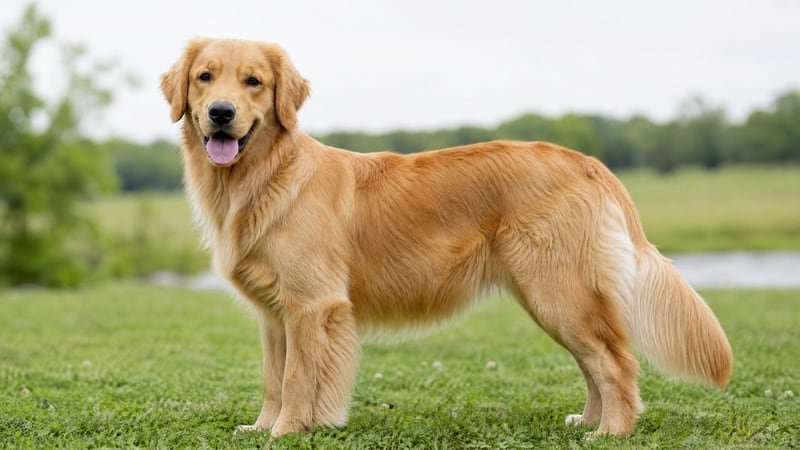
Temperament profile
Golden Retriever dogs are usually gentle and people-oriented, and their larger frame is easiest to read when meals, activity, and weigh-ins stay steady.
Daily rhythm
Daily structure with enrichment keeps growth routines and behavior balanced.
Weight-tracking note
A thick double coat can make a soft waist harder to notice
Use this page with
Calculator
Open the homepage calculator with Golden Retriever selected and compare the live result with this guide.
Open calculatorSize chart
Explore the site's general size estimates. These are planning tools, not the official breed standard or a veterinary growth assessment.
Open size chartGuide
Review the core framework for trend tracking, body condition, and using ranges responsibly.
Open guideAge calculator
Use Golden Retriever's usual adult-size band to compare dog age with human years.
Calculate ageRelated guides
Age guide
Read general growth context and the limits of age-based weight estimates.
Open age guideCondition
Use rib, waist, and tuck checks to decide whether Golden Retriever's number looks healthy in real life.
Open condition guideLarge growth
Use slow-growth context for Golden Retriever's frame, food routine, and exercise plan.
Open large guideMaturity
Compare Large growth timing with the point when height, muscle, and fill-out usually slow.
Open timing guideGrowth tracking
Stages
Golden Retriever growth is not just about pounds. Coat, confidence, joint comfort, and training habits all develop alongside the scale.
Early puppyhood
Young puppies depend on attentive feeding, warmth and care. Discuss any concern about growth with a veterinarian.
Settling into home
Record weight and feeding details, introduce gentle training and count food rewards as part of the daily ration.
Active growth
Follow repeat weigh-ins alongside movement, energy and body condition. Adapt activity to your puppy's development.
Approaching maturity
Ask your veterinarian about diet transitions and exercise as growth changes. Avoid treating continued weight gain as automatically desirable.
Adult maintenance
Continue regular activity, brushing, ear checks and measured portions.
Feeding rules
Use a complete and balanced growth diet suitable for large-breed puppies, and discuss the transition to adult food with your veterinarian.
Puppies generally do better with multiple meals, while adults commonly settle into two measured meals per day.
A kitchen scale makes portions more consistent than scoops, especially when the dog is close to adult size.
Change foods over several days and monitor stool, skin, appetite, and weight before changing anything else.
Swimming can be excellent exercise, but water-loving Goldens also need ear drying and grooming checks afterward.
A slow feeder or puzzle can stretch mealtime and add mental work without adding calories.
Feeding
Golden portions should follow food calories, expected adult size, activity level, and body condition. The coat can hide change, so hands-on checks are part of feeding.
Puppy rhythm
Young puppies need frequent meals. Agree on meal frequency and portions with your veterinarian, then adjust as growth and body condition change.
Condition check
Do not adjust food from appearance alone. Brush, feel the ribs, and check the waist before increasing or reducing portions.
Treat plan
Goldens are trainable and food-motivated, so small rewards, praise, toys, and part of the meal ration can keep training productive without weight drift.
Daily life
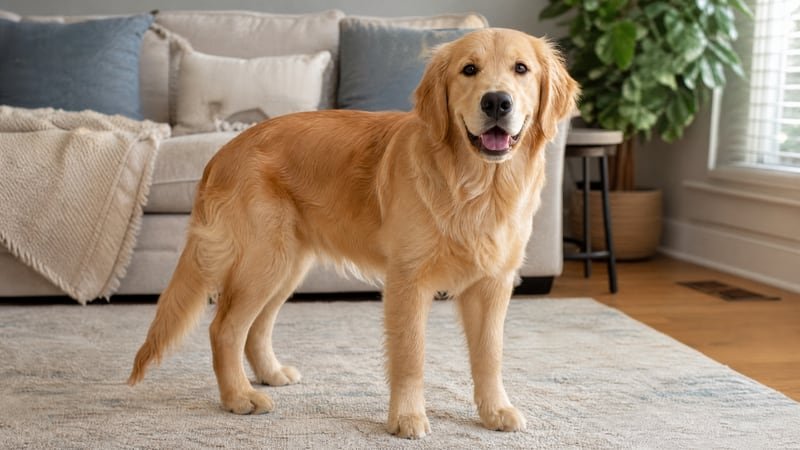
Good fit for
Things to watch
Care
Use a large-breed puppy formula through the vet-recommended growth window, then transition to adult food while watching body condition.
Daily walks, retrieving, swimming, and training keep a Golden balanced, but growth-stage exercise should stay steady instead of extreme.
Brush at least weekly, check behind the ears and hind legs for mats, and use grooming time to feel ribs and waist.
Goldens usually respond to warm, positive practice, but food rewards should stay small because this breed can gain quietly.
Warning signs
Golden Retrievers need a hands-on check because feathering and undercoat can hide both extra fat and thin condition.
Similar breeds
Next step
Use age and current weight for a planning estimate. Track repeat measurements and discuss your dog's individual growth with your vet.
FAQ
The adult weight and height references come from the official breed standard. The linked growth-chart resource explains its own research basis and age limits; veterinary nutrition sources support the care and body-condition guidance.
Estimates only. Not veterinary advice.