Adult range
Most adults should be about 15-20 lb
AKC lists West Highland White Terriers at 15-20 lb. A healthy adult should feel sturdy, compact, and well-boned, but ribs should still be findable and the waist should not disappear under the coat.

Calculators
Browse
Learn
Company & trust
Estimates only. Not veterinary advice.
West Highland White Terriers are small but sturdy, so the goal is a firm terrier outline rather than a round one. This guide connects the weight chart with skin and coat comfort, treat budgeting, daily activity, rib checks, and the way terrier confidence can make food and training routines matter.
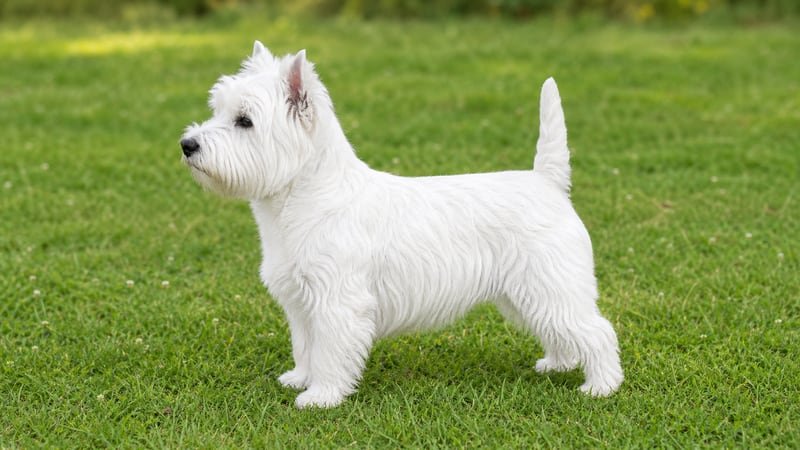
A healthy Westie should feel compact and sturdy, with ribs easy to find under the coat.

Overview
Adult range
7-9 kg
15.4-19.8 lb
Size class
Small breed
Matched size chart
Growth pace
Faster
Typical for this breed size
Check-in cadence
Weekly to monthly
Suggested rhythm
<16 w weekly | 16-32 w biweekly | 32 w+ monthly
Quick answers
Use these answers when you need the practical version first. The right Westie weight is the scale number plus compact structure, rib feel, waist, coat, skin comfort, movement, treat budget, and veterinary context.
Adult range
AKC lists West Highland White Terriers at 15-20 lb. A healthy adult should feel sturdy, compact, and well-boned, but ribs should still be findable and the waist should not disappear under the coat.
Growth timing
Westies mature faster than large breeds. Many are near adult height around 8-10 months and near adult weight by 10-12 months, with muscle, coat, and mature condition settling through about 12-18 months.
Build check
The standard calls for a compact, substantial terrier but also requires moderation. A Westie should not look barrel-shaped, padded over the ribs, or heavy enough to move stiffly.
Coat and skin
A hard white double coat, rounded head trim, and full furnishings can blur the outline. Feel the ribs, waist, shoulders, loin, tail base, and thighs by hand, especially during skin flare-ups or grooming changes.
Weight by age
West Highland White Terrier puppies grow into compact, confident, well-boned small terriers. The healthiest trend is steady growth toward the 15-20 lb adult range without losing rib feel, waist shape, smooth movement, or skin and coat comfort.
Use this chart as owner planning context, not a diagnosis. Frame, parent size, sex, height, coat, appetite, stool, treat calories, skin comfort, patella and hip comfort, and veterinary guidance decide the healthy target for an individual Westie.
| Age | Larger Frame | Smaller Frame |
|---|---|---|
| 8 weeks | 3.5-5 lb (1.6-2.3 kg) | 3-4.5 lb (1.4-2 kg) |
| 3 months | 5-7 lb (2.3-3.2 kg) | 4.5-6.5 lb (2-2.9 kg) |
| 4 months | 7-10 lb (3.2-4.5 kg) | 6-8.5 lb (2.7-3.9 kg) |
| 5 months | 9-12 lb (4.1-5.4 kg) | 8-10.5 lb (3.6-4.8 kg) |
| 6 months | 11-14 lb (5-6.4 kg) | 9.5-12.5 lb (4.3-5.7 kg) |
| 7 months | 12-15.5 lb (5.4-7 kg) | 10.5-14 lb (4.8-6.4 kg) |
| 8 months | 13-17 lb (5.9-7.7 kg) | 11.5-15 lb (5.2-6.8 kg) |
| 9 months | 14-18 lb (6.4-8.2 kg) | 12.5-16.5 lb (5.7-7.5 kg) |
| 10 months | 14.5-19 lb (6.6-8.6 kg) | 13-17.5 lb (5.9-7.9 kg) |
| 12 months | 15-20 lb (6.8-9.1 kg) | 14-19 lb (6.4-8.6 kg) |
| 15 months | 15-20 lb (6.8-9.1 kg) | 14-19 lb (6.4-8.6 kg) |
| 18 months | 15-20 lb (6.8-9.1 kg) | 14-19 lb (6.4-8.6 kg) |
Maturity
A Westie grows much faster than a large breed, but the compact terrier body still changes after the puppy looks close to adult size. Height, muscle, coat, appetite, skin comfort, and mature body condition do not always settle at the same time.
Record weight, food amount, stool, appetite, breeder notes, skin comfort, ear comfort, and treat use. Small changes matter because a few extra ounces are more meaningful in a 4 lb puppy than in a large breed.
Many Westies gain quickly here. Check ribs and waist every week, keep rewards tiny, and call your vet if chewing hurts, appetite drops, limping appears, or weight changes with itching or diarrhea.
Growth slows and the puppy may look stockier. Recheck portions when activity, training treats, dental chews, grooming, or skin flare-ups change.
Most Westies are near adult size. The final target should be compact, muscular, balanced, and comfortable, not round through the ribs, belly, or tail base.
Key takeaway
A Westie can be full height but still changing in muscle and coat. Use the scale with ribs, waist, skin, gait, stool, appetite, and veterinary checks.
Growth check
A good Westie trend is steady, bright, and comfortable. The coat and naturally sturdy build can make a dog look healthy even when small amounts of extra padding are building.
Owner check
Feel through the coat at the ribs, shoulders, loin, belly, thighs, and tail base. A Westie can look plush and still be either padded or losing muscle.
Breed snapshot
Temperament profile
West Highland White Terrier dogs are usually confident and sturdy, and their compact frame makes measured meals and repeat check-ins especially useful.
Daily rhythm
Use short, confident sessions with tiny rewards and clear boundaries.
Weight-tracking note
Skin irritation can reduce comfort and activity
Use this page with
Calculator
Open the homepage calculator with West Highland White Terrier selected and compare the live result with this guide.
Open calculatorSize chart
Use the Small size chart to compare the broader checkpoint range behind this breed guide.
Open size chartGuide
Review the core framework for trend tracking, body condition, and using ranges responsibly.
Open guideAge calculator
Use West Highland White Terrier's usual adult-size band to compare dog age with human years.
Calculate ageRelated guides
Age guide
Compare West Highland White Terrier checkpoints with month-by-month puppy growth context before reading the breed graph.
Open age guideCondition
Use rib, waist, and tuck checks to decide whether West Highland White Terrier's number looks healthy in real life.
Open condition guideMaturity
Compare Small growth timing with the point when height, muscle, and fill-out usually slow.
Open timing guideHealthy range
Use trend tracking and routine notes to keep West Highland White Terrier's estimate grounded.
Open basicsGrowth
Growth graph
West Highland White Terriers are small but well-boned terriers, so this chart is anchored to the official 15-20 lb adult range and interpreted through compact structure, ribs, waist, white double coat, skin comfort, treat calories, gait, and kneecap or hip comfort.
Chart span
2-18 months
Breed-specific monthly view
Male at 18 months
9 kg
19.8 lb
Female at 18 months
7.9 kg
17.4 lb
Re-check cadence
1-2 weeks early
Trend beats one weigh-in
This breed-specific chart tracks the average monthly line for male and female West Highland White Terrier puppies from 2-18 months. Use the line as a planning reference. A healthy Westie trend still depends on frame, height, family line, coat density, grooming style, food calories, training rewards, stool, appetite, body condition, skin comfort, patella and hip comfort, and veterinary exams.
Calculator bridge
Open the homepage calculator with West Highland White Terrier selected, add the latest weigh-in, then compare the result back against this guide.
What this means
When to re-check
Re-check a West Highland White Terrier every 2 to 4 weeks during growth, and sooner after skin, appetite, treat, or activity changes.
Next action
Most useful after a fresh weigh-in, then compare the result back against this breed graph and the matching size chart.
Daily life

Good fit for
Things to watch
Care
Use measured meals and tiny rewards because small terrier calories add up quickly.
Provide daily walks, play, and sniffing without overfeeding for activity.
Brush and check coat, skin, ears, paws, ribs, and waist regularly.
Use upbeat consistency, reward control, and practical manners work.
Warning signs
Weight problems in a Westie can hide under a white coat or look like normal terrier sturdiness. Watch the whole dog: ribs, waist, skin, ears, paws, gait, appetite, stool, and mood.
Weight problems in a Westie can hide under a white coat or look like normal terrier sturdiness. Watch the whole dog: ribs, waist, skin, ears, paws, gait, appetite, stool, and mood.
Similar breeds


Next step
Use live age and weight inputs, then compare the result with this breed guide and its matching size chart.
FAQ
This page combines official breed size, parent-club structure and health context, veterinary nutrition principles, and search-intent review so the guidance is specific to Westies rather than a generic small-dog chart.
Estimates only. Not veterinary advice.