How to Measure Dog Height

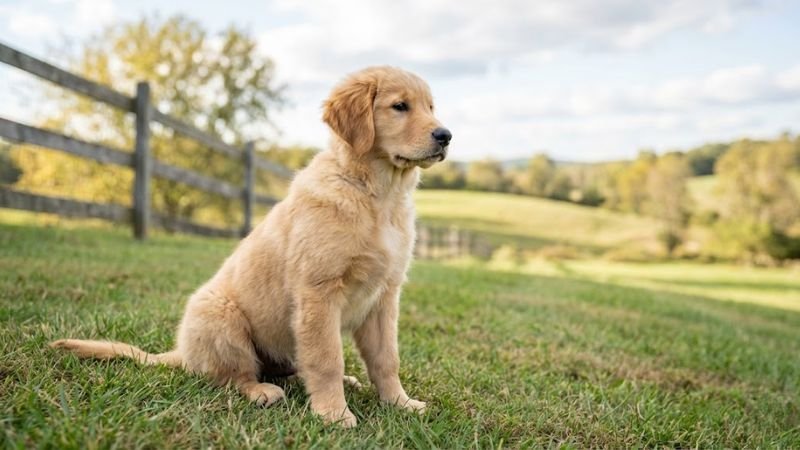
A clear side profile makes the withers easier to locate; standard height excludes the head and ears. Photo: Andreas Ebner/Pexels.
To measure dog height correctly, stand your dog naturally on a flat floor and measure straight up to the withers—the highest point of the shoulders. Do not measure to the top of the head or ears.
The most repeatable home method uses a wall, a carpenter's level or rigid straight edge, and a tape measure. Place the level lightly across the withers, mark that height on the wall, move your dog away, and measure vertically from the floor to the mark.
QUICK ANSWER
Measure from the floor to the highest point of the shoulders
Keep your dog on all four paws in a normal stance. Transfer the withers height horizontally to a wall, then measure the vertical distance. Repeat once and record the most consistent reading.
- Top point
- Withers, not head or ears
- Bottom point
- Flat floor beside the front feet
- Direction
- Vertical, perpendicular to the floor
Where do you measure a dog's height?
A dog's height is measured at the withers. The withers are the highest point of the shoulders, around the upper edges of the shoulder blades where the neck meets the back. The American Kennel Club defines height as the vertical measurement from the withers to the ground.
Run your hand from the back of your dog's neck toward the shoulders. Feel for the upper edges of the shoulder blades rather than relying only on what you can see, especially on a long- or thick-coated dog.
The measurement is a straight vertical line:
Floor → Withers = Dog height
Do not follow the curve of the body with a flexible tape. Head position, neck carriage, and ear shape vary too much to provide a consistent endpoint.
What do you need to measure dog height?
You do not need professional equipment for normal home tracking. Gather:
- a tape measure or yardstick;
- a carpenter's level or another rigid, straight object;
- a flat, firm floor beside a wall or door frame;
- removable painter's tape or a pencil for the wall mark; and
- a helper or a small treat if your dog moves easily.
A hard floor is easier to repeat than thick carpet because all four paws remain at a consistent level. For formal show measurements, AKC guidance calls for a flat, level, nonslip surface and an approved measuring wicket.
How to measure dog height step by step
The wall-and-level method separates the difficult part—holding your dog still—from reading the tape. It also gives you a fixed mark that is easy to recheck.
1. Stand your dog on a flat surface
Place your dog beside a wall, standing naturally on all four paws. The front legs should be reasonably straight and the feet should rest at the same floor level. Avoid measuring while your dog is sitting, crouching, leaning, stretching forward, or reaching upward.
Keep the head in a normal position. If you use a treat, hold it around nose level rather than high above the dog. AKC show guidance likewise specifies a natural stance with the head held normally.
2. Find the withers
Feel along the top of the shoulders just behind the neck. Locate the highest point over the shoulder blades. On a heavily coated dog, part or gently compress the coat enough to find the underlying landmark; do not measure to the top of fluffy fur.
3. Place a level across the withers
Rest the level lightly across the withers and extend it horizontally until it touches the wall. Check the bubble if you are using a carpenter's level. Do not press into the coat or push down on the shoulders.
4. Mark the height on the wall
Mark where the lower edge of the level meets the wall. Removable tape works well if you do not want to leave a pencil mark. Once the mark is made, allow your dog to move away.
5. Measure from the floor to the mark
Place the end of the tape on the floor directly below the mark. Keep the tape vertical and read the distance at the mark. That number is your dog's height at the withers.
For example, a wall mark 21 inches above the floor means the dog is 21 inches tall at the withers. To convert inches to centimeters, multiply by 2.54: 21 × 2.54 = 53.34 cm.
6. Repeat the measurement
Reset your dog's stance and repeat the process once. If the readings differ noticeably, check posture, floor level, the withers landmark, and the angle of the level. For growth tracking, repeatability matters more than measuring to a fraction of an inch.

Which dog-height measurement method is best?
For most owners, a wall and level give the clearest home reading. A rigid measuring stick can be quicker, while official events may require a wicket and an authorized measuring procedure.
| Method | Best use | Main consideration |
|---|---|---|
| Wall, level, and tape | Home measurement and growth tracking | Easy to repeat using the same setup |
| Rigid vertical measuring stick | Quick home check | Must remain vertical while the dog stands naturally |
| Wicket | Formal measurement and some dog events | Requires correct setup, surface, and procedure |
The AKC defines a wicket as a device used to measure height at the withers. A home reading can be useful, but it should not be presented as an official competition measurement.
Common mistakes when measuring dog height
Measuring to the head or ears
This is the most common error. Dogs are not measured like people. The standard endpoint is the withers, so neither the skull nor upright ears count.
Measuring while the dog sits or reaches
A sitting dog has no standard standing height, and a dog reaching for a treat can lift or shift the shoulders. Keep all four paws down and the head neutral.
Using an uneven or soft surface
A slope, thick carpet, or unstable mat changes the relationship between paws and shoulders. Use the same level, firm floor each time.
Measuring fur instead of the shoulder landmark
Thick coat can add apparent height. Find the shoulder structure with your fingers first and place the straight edge lightly at that anatomical point.
Holding the tape diagonally
A diagonal line is longer than the true vertical distance. Transfer the withers height to the wall and measure straight up from the floor.
Expecting home measurements to be identical every time
Small differences are normal because posture, coat, surface, and landmark placement can change. Use the same method and record measurements consistently rather than overinterpreting a tiny change.
How to measure a puppy's height
Use the same floor-to-withers method for a puppy, but treat the result as one growth checkpoint rather than a final-size prediction. Record the date, age, height at the withers, and current weight together.
For ordinary home tracking, measuring about once a month is usually enough. Weekly readings can create noise because a slightly different stance may look like growth. Use the same floor, wall, person, and tools whenever possible.
Avoid comparing every puppy with one universal height chart. Breeds and individual dogs mature at different rates and have different proportions. Smaller dogs generally complete visible growth earlier than large and giant dogs, but height, chest depth, muscle, and body mass do not necessarily mature on the same schedule. For context, see when dogs stop growing and the puppy weight chart by age.
Does dog height tell you what your dog should weigh?
No. Height describes part of a dog's frame, but it cannot determine ideal weight by itself. Two dogs with the same shoulder height can have different healthy weights because breed structure, sex, age, muscle, and body condition differ.
Use height beside weight rather than instead of it. If you know your dog's current weight, the Dog Weight Calculator can provide growth context, while the Dog Ideal Weight Calculator combines current weight with body-condition information. These tools provide reference estimates, not a diagnosis.
Why is height at the withers used?
The withers provide a repeatable anatomical landmark across dogs with very different skull shapes, ear types, neck carriage, and body proportions. The head can move dramatically; the highest point of the shoulders is more stable.
This standard is useful when comparing breed standards, assigning certain competition divisions, fitting equipment, or tracking growth. In AKC agility, official height at the withers helps determine jump-height divisions.
When do you need an official dog-height measurement?
A careful home measurement is usually enough for a growth record or general size information. Conformation shows, agility trials, and other organized dog sports may have specific rules, approved equipment, and authorized officials.
If a measurement affects competition eligibility or jump height, follow the current rules of that organization. AKC show guidance uses a wicket, a natural stance, the highest point of the withers, and a flat, level, nonslip surface. A number taken at home may be close, but it is not a substitute for a required official measurement.
COMMON QUESTIONS
Dog-height measurement FAQ
Where do you measure a dog's height?
Measure vertically from the floor to the withers, the highest point of the shoulders. Do not include the head, neck, or ears.
Can you measure dog height with a tape measure?
Yes. Use a level or rigid straight edge to transfer the withers height to a wall, then measure vertically from the floor to the mark. This is easier to repeat than holding a flexible tape against a moving dog.
How often should you measure a puppy's height?
About once a month is usually enough for a simple home growth record. Use the same setup and record the puppy's age and weight with the height.
Does a dog's height determine its ideal weight?
No. Healthy weight also depends on breed structure, sex, age, muscle, and body condition. Height is one piece of size information.
RESEARCH Research and references Primary AKC terminology and official measuring guidance support this home method.
Fact-checked August 21, 2026. Competition rules can change; consult the current event rules when an official measurement is required.
- TerminologyAmerican Kennel Club glossary: height, withers, and wicket Open source
- Show measurementAKC guidance for measuring show dogs Open source
- Official procedureAKC weights and measures instructions Open source
- Dog sportsAKC agility trial regulations and height divisions Open source
Save a complete growth checkpoint
Record height with your dog's age and current weight, then use the calculator for broader growth context.