Adult range
Many adult Mastiffs are about 120-230 lb
AKC lists males at 160-230 lb and females at 120-170 lb. The Mastiff Club of America notes the breed standard itself has no weight range, so use published weights for planning, not as a contest.

Calculators
Browse
Learn
Company & trust
Estimates only. Not veterinary advice.
Mastiff puppies grow for a long time, and the healthiest path is usually slow, steady, and lean rather than as heavy as possible. This guide reads the chart through giant-breed joint load, body condition, meal control, growth pace, and the wide normal range between individual lines.
For a Mastiff, lean and steady is usually safer than heavy and fast during growth.
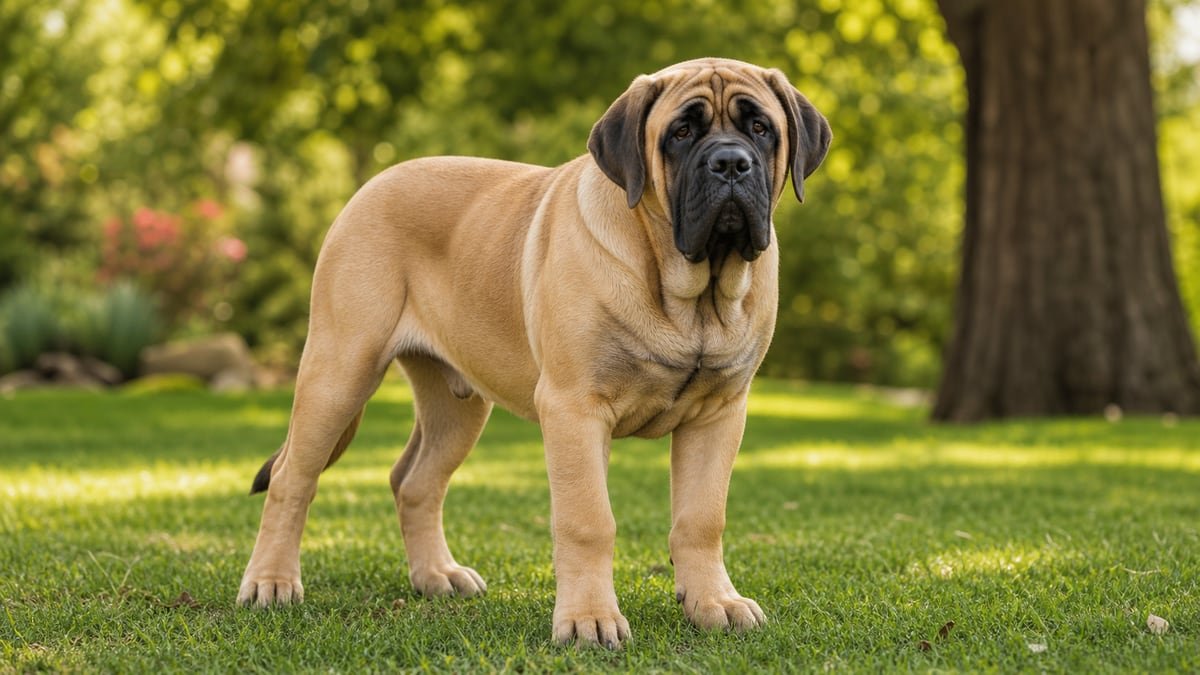
Overview
Adult range
54-104 kg
119-229.3 lb
Size class
Giant breed
Matched size chart
Growth pace
Slower
Typical for this breed size
Check-in cadence
Weekly to monthly
Suggested rhythm
<16 w weekly | 16-32 w biweekly | 32 w+ monthly
Quick answers
Start here if you need the practical answer. Mastiffs are supposed to be massive, but the healthiest target is a sound, lean-enough giant, not the biggest number possible.
Adult range
AKC lists males at 160-230 lb and females at 120-170 lb. The Mastiff Club of America notes the breed standard itself has no weight range, so use published weights for planning, not as a contest.
Growth timing
AKC notes that very large breeds such as Mastiffs may not reach fully grown size until 24 months. Chest, muscle, adult weight, and mature condition do not finish on the first birthday.
Best check
The standard gives type and soundness equal weight. A healthy Mastiff should feel powerful, but ribs should still be findable and movement should not look overloaded.
Feeding goal
MCOA guidance says Mastiffs will reach their genetic size whether they get there slowly or quickly, and slow growth is preferred to reduce long-term joint and bone risk.
Weight by age
Mastiff puppies grow into massive, heavy-boned dogs with powerful muscle, deep bodies, and huge variation between family lines. The healthiest trend is steady gain with controlled meals, easy movement, and a body that is big without being padded.
Use this chart as a planning range, not a diagnosis. The official standard sets minimum height and structure language, while adult weight depends on sex, frame, genetics, condition, food amount, activity, and veterinary guidance.
| Age | Male Mastiff | Female Mastiff |
|---|---|---|
| 8 weeks | 20-35 lb (9.1-15.9 kg) | 18-30 lb (8.2-13.6 kg) |
| 3 months | 40-60 lb (18.1-27.2 kg) | 35-55 lb (15.9-24.9 kg) |
| 4 months | 55-80 lb (24.9-36.3 kg) | 50-72 lb (22.7-32.7 kg) |
| 5 months | 70-100 lb (31.8-45.4 kg) | 60-88 lb (27.2-39.9 kg) |
| 6 months | 85-120 lb (38.6-54.4 kg) | 75-105 lb (34-47.6 kg) |
| 8 months | 105-150 lb (47.6-68 kg) | 90-125 lb (40.8-56.7 kg) |
| 10 months | 125-175 lb (56.7-79.4 kg) | 105-145 lb (47.6-65.8 kg) |
| 12 months | 140-195 lb (63.5-88.5 kg) | 115-155 lb (52.2-70.3 kg) |
| 15 months | 150-215 lb (68-97.5 kg) | 120-165 lb (54.4-74.8 kg) |
| 18 months | 160-225 lb (72.6-102.1 kg) | 120-170 lb (54.4-77.1 kg) |
| 24 months | 160-230 lb (72.6-104.3 kg) | 120-170 lb (54.4-77.1 kg) |
Maturity
Mastiffs mature slowly. A young Mastiff can be taller and heavier than most adult dogs while still needing time for joints, chest, muscle, coordination, and adult condition to settle.
This is a high-change stage, but fast gain is not the goal. Use measured meals, steady check-ins, and a food appropriate for large or giant puppy growth.
A Mastiff may already be extremely heavy, but the dog is still developing. Watch rising, footing, stairs, limping, meal size, and recovery.
Growth may slow, but many Mastiffs still add chest, muscle, and substance. Keep the dog lean enough to move easily.
Very large breeds like Mastiffs may not reach fully grown size until about 24 months. Use body condition and veterinary exams to confirm the target.
After growth, body condition can shift with activity, heat, food, treats, neuter or spay status, joint comfort, and age. Keep monitoring instead of assuming the number is fixed.
Key takeaway
MCOA guidance is blunt: Mastiffs reach their genetic size whether slowly or quickly. Slow, lean development is the better target for long-term comfort.
Growth check
A good Mastiff growth trend is steady, strong, and mobile. Use these checks with the chart, calculator, and your veterinarian's advice.
Owner check
A Mastiff should have heavy bone and powerful muscle, but the hands should still find ribs and the eyes should still see comfortable movement.
Weight factors
Mastiff weight is shaped by sex, frame, family line, maturity, food, training rewards, activity, heat, and health. The scale needs context every time.
The official standard sets minimum height and describes massive bone, powerful muscle, depth, breadth, proportion, and soundness. That means weight must be interpreted through structure and movement.
AKC lists males at 160-230 lb and females at 120-170 lb. MCOA FAQ gives an even wider owner-facing range, so frame and condition matter.
Mastiffs are rectangular, deep, broad, and heavy boned, but a healthy body should not feel like a soft cylinder from shoulders to hips.
Large and giant puppy guidance favors relatively slow and steady growth. Extra food does not create better genetics.
Large meals, fast eating, and exercise near meals can matter for GDV risk. Split meals, use calm routines, and discuss prevention with your veterinarian.
Rapid gain, rapid loss, limping, vomiting, diarrhea, failed urination attempts, non-productive retching, belly swelling, pale gums, or collapse should not be treated as a chart issue.
Breed snapshot
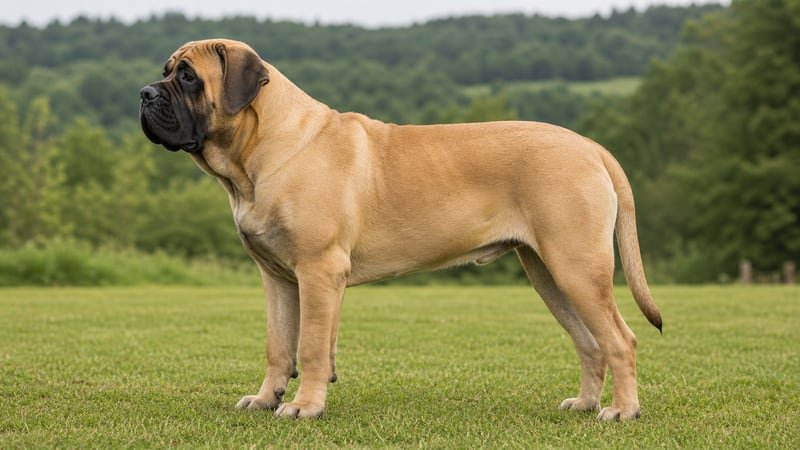
Temperament profile
Mastiff dogs are usually gentle and massive, and their larger frame is easiest to read when meals, activity, and weigh-ins stay steady.
Daily rhythm
Build calm leash manners, handling, and impulse control early while size is still manageable.
Weight-tracking note
Rapid gain can increase stress on developing joints
Use this page with
Calculator
Open the homepage calculator with Mastiff selected and compare the live result with this guide.
Open calculatorSize chart
Use the Giant size chart to compare the broader checkpoint range behind this breed guide.
Open size chartGuide
Review the core framework for trend tracking, body condition, and using ranges responsibly.
Open guideAge calculator
Use Mastiff's usual adult-size band to compare dog age with human years.
Calculate ageRelated guides
Age guide
Compare Mastiff checkpoints with month-by-month puppy growth context before reading the breed graph.
Open age guideCondition
Use rib, waist, and tuck checks to decide whether Mastiff's number looks healthy in real life.
Open condition guideLarge growth
Use slow-growth context for Mastiff's frame, food routine, and exercise plan.
Open large guideMaturity
Compare Giant growth timing with the point when height, muscle, and fill-out usually slow.
Open timing guideGrowth
Growth graph
Mastiffs are among the largest companion dogs, so this chart is built around slow giant-breed growth, wide adult ranges, soundness, and body condition instead of maximum weight.
Chart span
2-24 months
Breed-specific monthly view
Male at 24 months
104 kg
229.3 lb
Female at 24 months
77 kg
169.8 lb
Re-check cadence
2-4 weeks
Trend beats one weigh-in
This breed-specific chart tracks the average monthly line for male and female Mastiff puppies from 2-24 months. Use the line as a planning reference. A healthy Mastiff trend still depends on ribs, waist, gait, muscle, appetite, stool, meal routine, recovery, and veterinary exams.
Calculator bridge
Open the homepage calculator with Mastiff selected, add the latest weigh-in, then compare the result back against this guide.
What this means
When to re-check
Re-check a Mastiff every 2 to 4 weeks during growth, with extra attention after diet changes, growth spurts, limping, or activity changes.
Next action
Most useful after a fresh weigh-in, then compare the result back against this breed graph and the matching size chart.
Stages
These stages help owners understand why a Mastiff can look enormous before it is physically mature.
8-12 weeks
Record starting weight, food brand, meal amount, stool quality, appetite, breeder notes, parent size, and early vet findings.
3-6 months
Weigh often, measure meals, avoid rapid gain, and keep exercise controlled enough for a fast-changing body.
6-9 months
The puppy may be heavy enough to strain handlers. Prioritize leash manners, safe footing, calm greetings, and low-impact movement.
9-12 months
A Mastiff can look close to adult size while still needing time for muscle, chest, coordination, and mature condition.
12-18 months
Weight changes slow but may continue. Judge progress through ribs, waist, gait, rising, stool, appetite, and recovery.
18-24 months
Many Mastiffs are close to adult size. Keep the dog strong and lean rather than letting mature size become extra padding.
24 months+
Once growth settles, adjust food around activity, treats, weather, mobility, and body condition. A huge adult still needs regular hands-on checks.
Feeding rules
Choose a complete and balanced puppy food appropriate for large-size dogs unless your veterinarian gives different instructions.
Use measured portions and track food, treats, chews, table food, appetite, stool, and body condition. Guessing is risky with this much growth.
Review several check-ins with ribs, waist, movement, stool, appetite, and recovery before changing food amounts.
MCOA guidance warns against making Mastiff puppies or young adults fat. The dog will reach its genetic size without being pushed.
Do not add calcium or growth supplements unless your veterinarian recommends them. Balanced diets already manage mineral needs.
Feed predictable meals, slow down fast eaters, avoid hard activity near meals, and ask your vet about GDV prevention for your individual Mastiff.
Feeding
The exact amount depends on calories per cup, age, sex, activity, body condition, heat, health, and your veterinarian's plan. The routine matters as much as the amount.
Puppy
Use measured meals and a large or giant-breed puppy food. Re-check weight and condition regularly because plump, heavy puppies are not healthier puppies.
Adolescent
A young Mastiff may be very hard to handle if manners are late. Keep rewards small, activity low-impact, and meal notes consistent.
Adult
Once adult size settles, adjust portions around activity, treats, weather, neuter or spay changes, and body condition.
Senior
Older Mastiffs may change activity, muscle, and joint comfort. Ask your veterinarian before starting a major weight-loss plan or food change.
Treats
Treats should stay a small part of daily calories. Use tiny rewards and subtract frequent training food from meals when needed.
Vet review
For a better target, bring weight history, food amount, calorie information, treat count, activity notes, stool notes, body photos, and any limping or meal-timing concerns.
Daily life
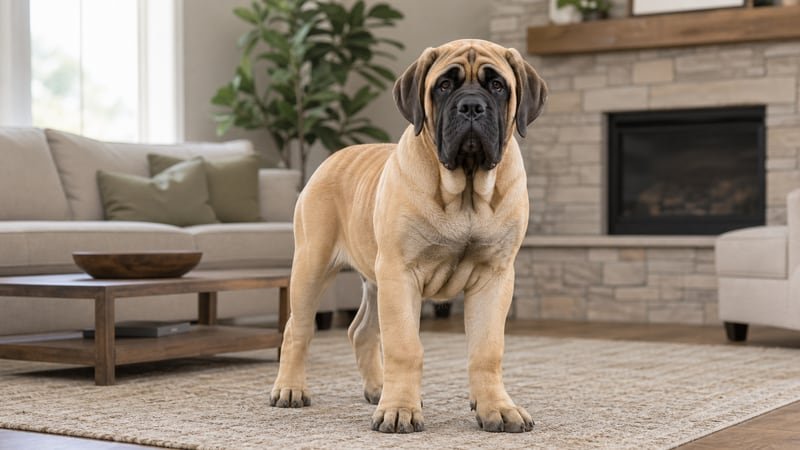
Good fit for
Things to watch
Care
Use measured large-breed or giant-breed growth nutrition and avoid pushing rapid weight gain.
Favor controlled low-impact movement, leash practice, and rest while joints develop.
Keep skin folds, paws, nails, and pressure points comfortable during routine checks.
Teach calm greetings, leash manners, handling, and settle cues before adult size arrives.
Warning signs
Use this page for tracking, not diagnosis. Call your veterinarian when weight changes appear with appetite, stool, mobility, meal distress, urination, or recovery problems.
Similar breeds
Next step
Use live age and weight inputs, then compare the result with this breed guide and its matching size chart.
FAQ
The page combines official breed size information, Mastiff parent-club guidance, health-screening context, veterinary nutrition principles, body-condition guidance, bloat safety information, and search-intent review.
Estimates only. Not veterinary advice.