
6 Best Online Dog Training Platforms and Communities for Dog Owners in 2026
Your dog knows how to sit at home. But the moment another dog walks past, it's as if that command never existed. Sound familiar? Training a dog takes patience, and finding the right guidance isn't always easy. One trainer recommends daily exercises. Another suggests a completely different approach. Before long, you're watching endless videos without knowing what to practice next. That's where online dog training platforms can help. The best online dog training platforms in 2026 include Pupford, Dogo, Zigzag, BAXTER & Bella, Rover, and Fenzi Dog Sports Academy. Each offers a different way to learn, from free beginner lessons to professional coaching and independent dog owner communities. Some are better for raising a puppy. Others provide feedback from experienced trainers or help owners connect with people facing similar challenges. Let's look at what makes these six options worth considering and which one might suit you and your dog.
The 6 Best Online Dog Training Platforms at a Glance
These six dog training platforms offer different learning experiences. Your best choice depends on what you're teaching, how much guidance you need, and whether you prefer lessons or a community.
| Platform | Best for | Training format | Cost model |
|---|---|---|---|
| Pupford | Free beginner training | Video courses | Free + paid |
| Dogo | Guided daily training | Mobile app + feedback | Subscription |
| Zigzag | New puppy owners | Personalized app | Subscription |
| BAXTER & Bella | Ongoing family support | Online school + coaching | Membership |
| Rover | Private trainer guidance | Individual sessions | Per session |
| Fenzi Dog Sports Academy | Advanced skills | Online classes + workshops | Per course |
These are editorial best-for recommendations based on publicly documented features and training formats, not hands-on test scores. Prices, membership benefits, and availability may change.
6 Best Online Dog Training Platforms and Communities in 2026
1. Pupford — Best for Free Beginner Dog Training
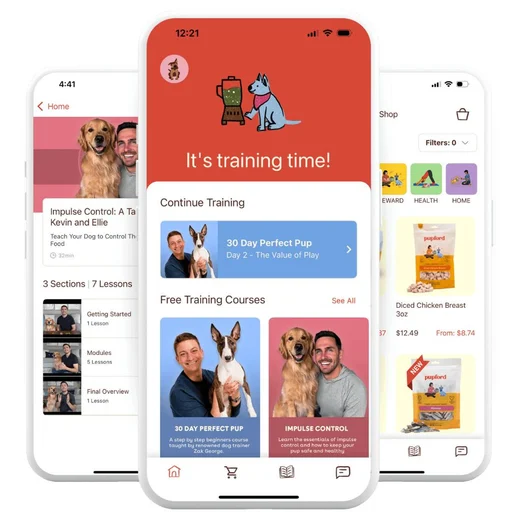
Pupford is an excellent starting point for dog owners who want structured training without paying upfront. Its free 30-Day Perfect Pup course, developed with trainer Zak George, introduces everyday skills through short video lessons.
Instead of jumping between random tutorials, owners can follow a clear learning path. Lessons cover practical subjects such as house training, basic obedience, and managing common puppy behaviors.
The free course is available through the Pupford app or website. Pupford also offers Academy+ for people who want access to additional training topics.
Why it stands out
The biggest advantage is having a structured course that doesn't require a credit card. Imagine bringing home a puppy that keeps jumping on visitors. Rather than trying several unrelated techniques, you can work through foundational skills and build better habits gradually. Pupford makes it easier to begin with the basics instead of tackling everything at once.
What to consider: The free lessons won't provide the same individualized attention as a private trainer. Advanced courses and additional features may require payment.
Best for: First-time owners, people training on a budget, and families who want a simple starting point.
2. Dogo — Best for Guided Training With Trainer Feedback
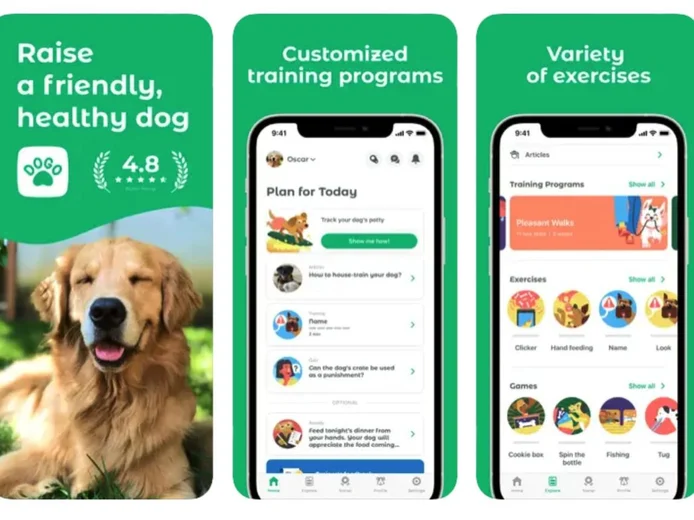
Dogo is ideal for owners who want daily training exercises and personalized feedback through their phones. The app combines step-by-step lessons with tools that help you track your dog's progress.
Its training library includes more than 100 tricks and exercises. Owners can work on everyday skills such as leash walking, recall, and basic obedience.
One useful feature is the option to submit a training video for feedback from a trainer. Dogo also includes a built-in clicker, which helps mark the exact moment your dog performs the desired behavior.
Why it stands out
Watching an instructor demonstrate a command is useful, but it doesn't always tell you what you're doing wrong. Suppose your dog follows the "stay" command for two seconds but moves whenever you take another step. A video review can help identify whether your timing or the difficulty of the exercise needs adjusting. That extra feedback makes Dogo different from a basic library of training videos. It also suits owners who prefer completing small exercises throughout the day instead of attending scheduled classes.
What to consider: Dogo is primarily a paid app after its trial. Video feedback isn't the same as having a trainer beside you during a live session.
Best for: Owners who enjoy app-based learning, want regular practice activities, and value feedback on their training technique.
3. Zigzag — Best for New Puppy Owners

Zigzag focuses on helping puppy owners understand what to teach and when to teach it. Its training approach is built around a puppy's age and development rather than offering the same lessons to every dog. The app provides bite-sized lessons tailored to a puppy's age and breed. Training topics include body language, learning to spend time alone, and handling adolescence. Zigzag also offers an expert support service, which its official website describes as available seven days a week.
Why it stands out
A young puppy doesn't need to learn everything immediately. During the first weeks at home, simple routines and positive experiences matter more than complicated tricks. As the puppy grows, new challenges appear. Zigzag helps owners follow that progression.
For example, someone struggling with puppy biting can focus on age-appropriate lessons instead of expecting an energetic young dog to behave like a fully trained adult. That makes the experience less confusing for people raising their first puppy.
What to consider: Zigzag is focused on puppy development. Owners interested mainly in competitive obedience or advanced dog sports may find other platforms more suitable.
Best for: Families preparing for a puppy, first-time puppy owners, and people who want age-specific guidance.
4. BAXTER & Bella — Best for Ongoing Training Support
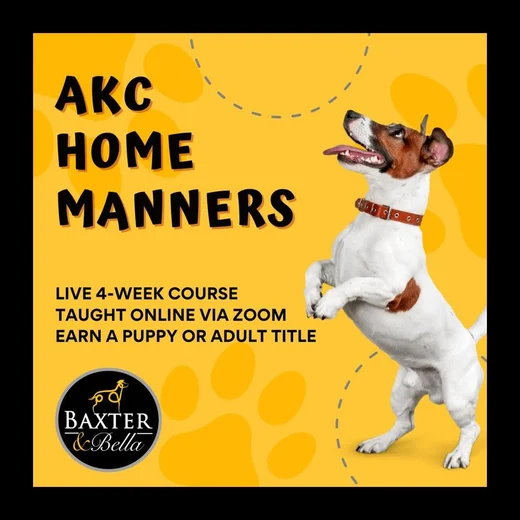
BAXTER & Bella suits owners who want a complete online dog training school with access to professional support. It combines structured lessons with live learning opportunities and community resources.
The program offers step-by-step training materials covering puppy preparation, house training, obedience, and everyday household behavior.
Members can also access recorded classes and live educational activities. The provider describes trainer-support options, private groups, and an Ask the Trainer resource as part of its training ecosystem.
Why it stands out
Sometimes a lesson makes perfect sense until you try it with your own dog. Maybe your puppy learns to walk calmly in the hallway but starts pulling outside. You might understand the basic technique and still need help applying it. BAXTER & Bella offers ways to seek guidance when those situations arise. Its broad curriculum also appeals to owners who want to continue beyond puppyhood rather than purchase a new beginner course every few months.
What to consider: Membership options and coaching benefits can differ. Check the current package carefully to understand which classes and one-on-one services are included.
Best for: Owners who prefer a complete training program, ongoing guidance, and opportunities to learn with other dog owners.
5. Rover — Best for Finding a Private Dog Trainer

Rover is a useful choice for owners who want to find an individual dog trainer rather than follow a fixed course. Its dog-training marketplace allows U.S. owners to compare trainers based on experience, training specialties, reviews, and pricing. Rover officially launched its expanded dog-training marketplace in the United States in March 2026. Trainers must provide documentation of relevant training education or credentials, pass background checks, and commit to reward-based methods. Rover describes its standard training sessions as private, in-person appointments.
Why it stands out
Individual coaching can be helpful when an owner understands the basics but cannot identify why a particular exercise isn't working. For example, a dog might remain calm during normal walks but become distracted when visitors enter the home. A trainer can observe the situation, discuss the dog's behavior, and suggest appropriate next steps.
When you need remote coaching, ask about session format before deciding which trainer to book.
What to consider: Rover focuses on local trainers. Confirm the location, session format and price before booking.
Best for: Owners who want personal instruction, customized training guidance, or help applying basic skills to everyday situations.
6. Fenzi Dog Sports Academy — Best for Advanced Skills and Dog Sports
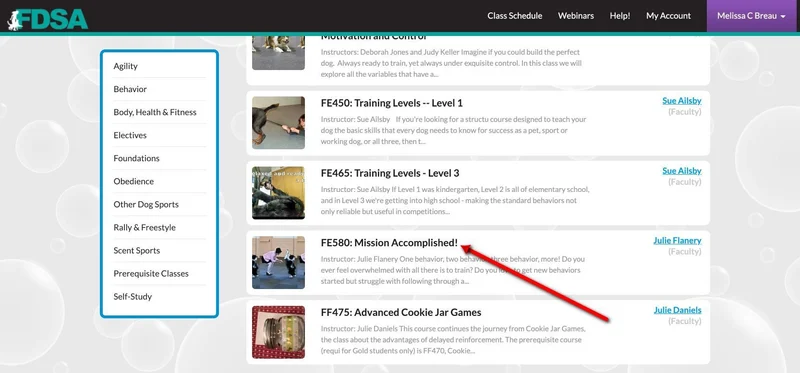
Fenzi Dog Sports Academy is a strong option for owners who want to move beyond basic commands into more specialized training. It provides online classes, workshops, and webinars covering a wide range of dog-training subjects.
Training opportunities include obedience, rally, nose work, agility foundations, and other skills. Fenzi offers different participation levels. Depending on the course, students may access instructional materials, participate in discussions, or submit videos for instructor feedback. Its official website lists webinars from $19.95 and longer classes ranging from $65 to $260, with the exact fee depending on the course and participation level.
Why it stands out
Not every owner stops training once a dog learns to sit and stay. Some want to improve their dog's focus. Others enjoy teaching complex behaviors or participating in organized dog sports. Fenzi provides a learning environment for those goals. Its classes can also introduce owners to other people who share a serious interest in dog training. That community aspect becomes especially valuable when learning skills that require careful practice.
What to consider: Some courses assume previous training experience. Also, instructor feedback is not included at every participation level.
Best for: Experienced dog owners, hobby trainers, and people interested in advanced obedience or canine sports.
Which Online Dog Training Platform Should You Choose?
The right platform depends on your dog's needs and the type of help you prefer. A free course may be enough for a young dog learning everyday manners. An experienced owner may benefit more from an advanced class, while someone struggling with a specific exercise could prefer personalized feedback. Here are some practical choices:
- Starting from scratch? Try Pupford's free beginner course.
- Want feedback on your technique? Consider Dogo.
- Bringing home a puppy? Look at Zigzag.
- Need ongoing lessons and support? Consider BAXTER & Bella.
- Prefer a private trainer? Use Rover to compare local trainers.
- Interested in advanced training? Explore Fenzi.
You don't necessarily need to choose only one. For example, you could use Pupford for a structured beginner course and join a dog owner community for general encouragement. When a particular skill becomes difficult, a qualified trainer can help you adjust your approach. The important part is avoiding conflicting advice. Pick one clear training method and follow it consistently.
What Should You Check Before Joining a Dog Training Platform?
A good dog training platform should offer clear lessons, humane training methods, and support appropriate to your dog's needs. A large video library doesn't automatically make a program better. Before subscribing, check these five things.
1. Does the Program Use Reward-Based Training?
Reward-based training teaches dogs by reinforcing desired behavior with something they value, such as food, toys, or play. The American Veterinary Society of Animal Behavior recommends reward-based methods and advises against training that relies on fear, pain, or physical punishment. Look for programs that explain their methods clearly instead of promising instant obedience or relying on dominance-based claims.
2. Can You Identify the Trainer's Qualifications?
A qualified instructor should explain their training experience and methods. Credentials such as CPDT-KA or relevant behavior-consulting qualifications can be helpful when evaluating a trainer. However, the letters after someone's name are not the only consideration.
Ask how they handle difficult situations and whether they refer serious cases to veterinary professionals.
3. Will You Receive Actual Feedback?
Trainer access can mean very different things. One platform may provide recorded lessons only. Another might let you message a trainer or submit a video. Private virtual sessions offer a different level of interaction. Choose the format that matches how much help you need.
4. What Will You Actually Pay?
Check whether the platform offers a free course, a trial that renews automatically, a monthly subscription, or a one-time membership. Look at the cancellation terms before entering payment details. A cheaper subscription may become expensive if you keep it for months without using it.
5. Is the Community Helpful and Well Moderated?
A useful dog training community should encourage respectful discussion and reliable training advice. Look for recent activity and clear moderation standards. Be cautious of groups where members recommend unsafe techniques or give confident medical advice without appropriate qualifications.
How to Make Online Dog Training Work at Home
Online dog training works best when you turn lessons into short, regular practice sessions. Watching videos alone won't teach your dog a new behavior. You still need to practice the exercise, reward progress, and gradually introduce distractions. The American Kennel Club recommends keeping sessions short and positive. Even five minutes of focused practice can be useful. Here's a simple routine you can follow.
Example: A five-minute training session
- Minute 1: Prepare a few suitable rewards and choose one skill.
- Minutes 2–3: Practice the skill in a quiet area with few distractions.
- Minute 4: Repeat successful attempts while keeping the exercise easy enough for your dog.
- Minute 5: Finish with an achievable repetition, reward your dog, and note what to practice next time.
This is a sample routine, not a fixed requirement. Adjust the pace to your dog's age, attention, and comfort.
For example, if you're teaching recall, begin in a safe indoor space. Reward your dog for coming when called. Once the response becomes reliable, you can gradually practice with mild distractions in a secure setting. Don't jump straight from the living room to calling your dog across a busy park. Skills usually need practice in different environments before they're dependable. Progress may feel slow some days. That's normal. What matters is helping your dog understand the behavior you want, rather than rushing through the course.
When Is In-Person Dog Training the Better Choice?
In-person training and veterinary assessment are important when a dog's behavior involves serious safety concerns, severe fear, or possible underlying health problems. Online lessons are useful for everyday manners and learning techniques, but they have limits. Consider seeking professional help when your dog:
- Has bitten someone or shows a credible risk of biting.
- Displays severe fear or distress around people or other animals.
- Panics when left alone.
- Guards food or objects aggressively.
- Develops sudden or unusual behavior changes.
For serious behavior problems, begin with your veterinarian to check for medical causes. They can help determine whether referral to a qualified behavior professional is appropriate. The American Veterinary Society of Animal Behavior emphasizes professional assessment and humane treatment plans for dogs experiencing significant behavioral difficulties. Online coaching may still become part of the plan, but a general course or community should not be treated as a replacement for individualized care.