My Dog Is Losing Weight but Eating Normally
A normal appetite does not rule out a health problem. Learn what this pattern can mean, how senior muscle loss differs from whole-body weight loss, and what to track for your veterinarian.
Quick answer
A dog can lose weight despite eating normally when the body is not receiving enough usable energy, cannot digest or absorb nutrients properly, or is losing fat or muscle because of disease. A normal appetite therefore does not rule out a health problem. Track the trend, and arrange veterinary evaluation when the loss is unexplained or continuing.
Weight loss deserves more attention when it continues across several weigh-ins or appears with increased thirst, diarrhea, vomiting, weakness, reduced mobility, or another change from your dog's usual behavior. Senior dogs need particular care because age-related muscle loss can occur alongside chronic disease.
Use your dog's weight trend as the starting point, then look at appetite, stool, water intake, body condition, and muscle condition together. A single number cannot explain why the change is happening.
Why can a dog lose weight even with a normal appetite?
Eating normally tells you that a dog is willing to eat. It does not show how many calories are actually consumed, whether those calories are digested and absorbed, or how the body uses them afterward.
Weight can fall through three broad routes:
- Not enough energy is entering the body. Portions may be smaller than assumed, a new food may contain fewer calories per cup, food may be shared or dropped, or exercise may have increased.
- Nutrients are not being digested or absorbed. Exocrine pancreatic insufficiency (EPI) and small-intestinal disease can cause malabsorption, so a dog may eat well while losing weight.
- The body is using stored fat and protein abnormally. Diabetes and other chronic diseases can change metabolism and promote loss of body tissue.
This pattern is not a diagnosis. It is a reason to collect better information and have a veterinarian interpret the complete picture.
Why is my senior dog losing weight but still eating?
A senior dog can lose weight while still eating because aging may reduce lean muscle mass, while chronic disease can also cause fat or muscle loss before appetite disappears. Age-related muscle loss is possible, but noticeable unexplained weight loss should not automatically be dismissed as normal aging.
AAHA describes sarcopenia as age-associated loss of lean body mass. It uses cachexia for disease-associated weight loss with excessive loss of lean body mass, which can occur with serious or chronic conditions such as kidney disease, heart disease, or cancer.
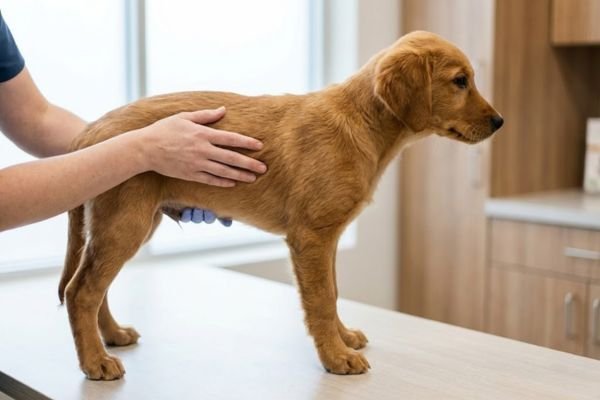
That distinction matters because an older dog's hips and thighs may become thinner even when the scale changes only modestly. Body condition score estimates fat stores, while muscle condition score evaluates muscle over areas such as the spine, shoulder blades, skull, and pelvis. Both should be assessed separately.
Age-related muscle loss versus disease
A senior dog that becomes slightly less muscular over time is not automatically sick. Aging changes body composition, and muscle condition can gradually decline. Disease becomes more concerning when the change is progressive or accompanied by another new sign.
| What you notice | What it can suggest |
|---|---|
| Thinner hips or thighs with slow change | Possible age-related muscle loss |
| Weight loss plus increased thirst and urination | Diabetes or kidney disease deserves investigation |
| Strong appetite plus continuing weight loss | Diabetes, EPI, or another malabsorption disorder |
| Weight loss plus bulky or chronic loose stool | Digestive or absorption disorder |
| Weight loss plus weakness or lethargy | A broader chronic disease process needs assessment |
| Progressive loss of weight and muscle | Sarcopenia or disease-related cachexia needs evaluation |
These are clues rather than diagnoses. AAHA identifies weight loss over time, altered thirst, progressive lethargy, and mobility changes among signs that can occur with chronic disease in senior pets.

Could diabetes cause a dog to eat and still lose weight?
Yes. Diabetes is a classic cause of weight loss despite a normal or increased appetite. Dogs with diabetes commonly develop increased thirst, increased urination, increased hunger, and weight loss because glucose is not being used normally by the body's cells.
The combination of getting thinner while drinking and urinating more is particularly useful information to report to your veterinarian. Diabetes cannot be confirmed from symptoms alone. Merck Veterinary Manual states that diagnosis is based on persistent high blood glucose together with glucose in the urine.
If your dog is eating enthusiastically but also emptying the water bowl faster or needing to urinate more often, do not simply increase the food portion to compensate for the weight loss.
Can poor digestion make a dog lose weight?
Yes. A dog can consume food but still lose weight if nutrients are not properly digested or absorbed. Merck identifies EPI and small-intestinal disease as major causes of malabsorption in dogs.
EPI occurs when the pancreas does not provide enough digestive enzymes. Weight loss, a strong appetite, and large amounts of loose or pale stool are common clues. A veterinarian may investigate EPI using a serum trypsin-like immunoreactivity test. If EPI is ruled out, additional testing may focus on small-intestinal disease.
Stool changes therefore matter. Record consistency, volume, frequency, color, and whether diarrhea persists instead of describing the stool only as "different." Do not start digestive enzymes without veterinary direction; the correct treatment depends on the cause.
Can kidney disease cause weight loss in an older dog?
Chronic kidney disease can contribute to weight and muscle loss, although appetite often decreases as disease advances. Increased thirst and urination may be noticed, while later disease can bring vomiting, dehydration, reduced appetite, and weight loss.
Senior dogs with kidney disease need body weight, body condition, and muscle condition monitored because chronic illness can make maintaining lean tissue difficult. A dog getting thinner while drinking or urinating noticeably more should be evaluated rather than having the change attributed to age alone.

Does senior muscle loss always show up on the scale?
No. A senior dog can lose muscle while total weight changes only slightly because body composition can change independently of the scale. AAHA notes that senior dogs may lose lean body mass while gaining fat. A stable number can therefore hide meaningful muscle loss.
Look at your dog's shape as well as the number. The spine, shoulder blades, hips, and thighs can reveal muscle loss before a large change appears on the scale. Use the site's dog body condition score guide beside weight tracking, while remembering that a veterinary muscle condition assessment also uses touch, not appearance alone.
Should you feed a senior dog more when weight starts dropping?
Do not automatically increase portions until you have a better idea why the weight is falling. Senior dogs can have very different nutritional needs depending on body condition and health status, and a diet appropriate for one older dog may be wrong for another.
AAHA notes that maintenance energy requirements generally decrease over a dog's lifetime, yet advanced-age dogs can also experience loss of lean mass and overall weight. Protein quantity and quality may matter for maintaining lean tissue, but kidney disease, diabetes, digestive disease, and other conditions can change the appropriate diet.
First confirm how much food is actually eaten, check calories per cup or can, include treats and toppers, and compare several reliable weigh-ins. Then discuss a meaningful adjustment with your veterinarian rather than making a major diet or supplement change on your own.
Track the pattern before the appointment
Combine consistent weigh-ins with food, stool, water, activity, body-shape, and medication notes. Unexplained weight loss still deserves a veterinary assessment.
What should you track at home?
Track the trend rather than trying to diagnose the cause yourself. A short, accurate record gives your veterinarian more useful information than one isolated measurement.
- Weight: use the same scale and similar conditions when possible. Weekly is often more useful than repeated daily weighing unless your veterinarian recommends otherwise.
- Food: record the exact product, calories per cup or can, amount offered, amount left, treats, toppers, and access to another pet's food.
- Water and urination: note a clear increase, more frequent trips outside, accidents, or larger urine volumes.
- Digestion: record vomiting and stool consistency, volume, frequency, and color.
- Body and muscle condition: take top and side photos in the same stance and lighting every few weeks. Look for change around the spine, shoulders, hips, and thighs.
- Function: note energy, walking tolerance, weakness, pain, sleep, and mobility changes.
Keep a dated weight log to organize the trend for your veterinarian. Read how accurate dog weight calculators are before treating any estimate as a medical conclusion.

When should dog weight loss be checked by a veterinarian?
Arrange veterinary evaluation when weight loss is unexplained, progressive, or repeated across several reliable weigh-ins—even if appetite remains good. AAHA lists weight loss over time among signs that can accompany chronic disease in older pets.
Contact your veterinarian sooner when weight loss occurs with increased thirst or urination, persistent diarrhea, repeated vomiting, weakness, reduced mobility, or another clear change from normal. Seek urgent veterinary care for collapse, difficulty breathing, severe weakness, repeated inability to keep water down, a swollen or painful abdomen, or other rapidly worsening signs.
A senior workup may include a full history, physical examination, body and muscle-condition assessment, blood testing, and urinalysis. Depending on the history and examination, the veterinarian may recommend fecal testing, specific gastrointestinal or endocrine tests, blood pressure measurement, X-rays, ultrasound, or other diagnostics. The plan should be tailored to the individual dog rather than testing for every possible disease at once.
What information will help at the appointment?
Bring your dog's recent weight history, the exact food and treats being fed, how much is offered, and how much is actually eaten. Include medications, supplements, parasite prevention, and any recent food or routine changes.
| Date | Weight | Appetite | Water/urination | Stool | Body change |
|---|---|---|---|---|---|
| Week 1 | Record | Normal | Baseline | Baseline | Take photos |
| Week 2 | Record | Normal | Note change | Note change | Check hips/thighs |
| Week 3 | Record | Normal | Compare | Compare | Compare photos |
This record can distinguish genuinely normal intake from apparent normal eating that is smaller than before. It also gives the veterinarian a clearer timeline for choosing appropriate tests.
COMMON QUESTIONS
Dog weight loss FAQ
Why is my dog losing weight while eating normally?
A dog can keep eating and lose weight when calorie intake is lower than it appears, nutrients are not being digested or absorbed, or disease changes how the body uses energy. Continuing unexplained weight loss needs veterinary evaluation even when appetite seems normal.
Can senior dogs lose weight from muscle loss?
Yes. Age-related sarcopenia can reduce lean muscle, especially around the spine, shoulders, hips, and thighs. Disease-related cachexia can look similar, so progressive or unexplained change should not be dismissed as normal aging.
Can diabetes make a dog lose weight while still eating?
Yes. Dogs with diabetes commonly develop weight loss together with increased appetite, thirst, and urination. Symptoms cannot confirm diabetes; diagnosis requires veterinary blood and urine testing.
Should I feed my dog more if weight is dropping?
Do not make a major portion or diet change until intake and health have been reviewed. Extra food may not correct malabsorption, diabetes, kidney disease, or disease-related muscle loss, and some conditions require a tailored nutrition plan.
When should unexplained dog weight loss be checked by a veterinarian?
Arrange veterinary evaluation when weight loss is unexplained, progressive, or repeated across weigh-ins. Seek help sooner when it occurs with increased thirst or urination, persistent vomiting or diarrhea, weakness, breathing difficulty, collapse, or another significant change.
Final takeaway
A dog losing weight while still eating should not be dismissed because the bowl keeps emptying. Some senior dogs lose lean muscle through sarcopenia, while diabetes, malabsorption, kidney disease, and other chronic conditions can create a similar pattern.
Track weight and muscle condition together, note changes in thirst, urination, stool, energy, and mobility, and arrange veterinary evaluation when the loss is unexplained or continuing. The goal is not to diagnose your dog at home; it is to bring the veterinarian a reliable trend and the clues needed to investigate efficiently.
RESEARCH Veterinary guidelines and references Senior-care guidance, muscle assessment, diabetes, malabsorption, and kidney-disease references.
Reviewed August 23, 2026. These sources support general education; your veterinarian must interpret signs and tests for the individual dog.
- Senior nutrition2023 AAHA Senior Care Guidelines: NutritionOpen source
- Body and muscleAAHA nutritional screening evaluationOpen source
- Senior diagnosticsAAHA: Evaluating the Unhealthy Senior PetOpen source
- DiabetesMerck Veterinary Manual: Diabetes Mellitus in Dogs and CatsOpen source
- MalabsorptionMerck Veterinary Manual: Malabsorption SyndromesOpen source
- Kidney diseaseMerck Veterinary Manual: Renal DysfunctionOpen source
- Assessment toolsWSAVA Global Nutrition ToolkitOpen source
Educational information only. This article cannot diagnose your dog and is not a substitute for veterinary examination, testing, or an individualized nutrition plan.